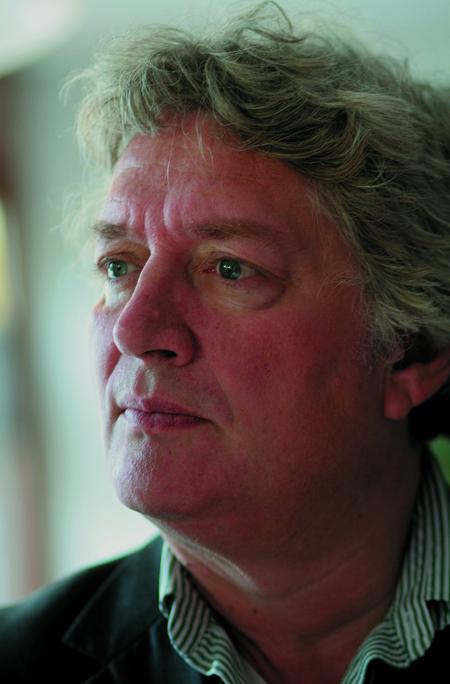
Jan Timman
14 december 1951 - 18 februari 2026
Jan Hendrik Timman was naast Max Euwe de beste schaker uit de Nederlandse geschiedenis. Ook was Timman auteur van talloze boeken, probleemcomponist, erelid van de KNSB en drager van de Euwe-ring.
I got to know Jan Timman via Twitter. Our acquaintance lasted about a year. We exchanged quite a few tweets about current and past top chess and various top players. He always replied kindly and competently and once decisively writing that he was not interested in what I suggested. I also followed his Twitter account because of the studies he posted. Rest in peace Jan.
Op 27 februari 2026
om 20:29 getekend door:
M.i.k.a. .K.a.a.k.i.n.e.n.
Dit is niet ok
om 20:29 getekend door:
M.i.k.a. .K.a.a.k.i.n.e.n.
Jan Timman was een man die de schaakwereld met zijn spel en vooral zijn persoonlijkheid zeer heeft verrijkt. Ik ben blij in zijn tijd geleefd te hebben!
Op 27 februari 2026
om 17:34 getekend door:
J.o.s. .R.e.n.c.k.e.n.s.
Dit is niet ok
om 17:34 getekend door:
J.o.s. .R.e.n.c.k.e.n.s.
Als collega titelhouder in de internationale schaakcompositie betreur ik het overlijden van Jan Timman. Het schaken op hoog wereld niveau en het componeren van eindspelstudies stopt nu voor Jan Timman. Hij laat veel mooie partijen en eindspelstudies na. Sterkte voor Timman's dierbaren.
Op 27 februari 2026
om 13:05 getekend door:
H.e.n.k. .P.r.i.n.s.
Dit is niet ok
om 13:05 getekend door:
H.e.n.k. .P.r.i.n.s.
Het overlijden van Jan Timman kwam voor mij als een grote schok. Hij was één van mijn grootste schaakhelden. Al vanaf 1977 toen ik hem als beginnend schaker voor het eerst zag spelen tijdens het IBM-schaaktoernooi in de RAI. Apetrots was ik toen hij een analyse van mij had opgenomen in Schaakbulletin die later (1983) ook in Schaakwerk I verscheen, een van de talloze fraaie boeken die hij heeft geschreven. Ik heb onnoemlijk veel geleerd van zijn partijanalyses, en genoten van zijn diepzinnige eindspelstudies (die ik vrijwel nooit kon oplossen).
Door mijn deelname aan het open toernooi van Curacao (2003) heb ik Jan beter leren kennen. De laatste jaren had ik regelmatig contact met hem via zijn trainingen en lezingen in het Max Euwe Centrum, 'Schakers van Formaat' in Amstelveen, onze gezamenlijke deelname aan het open toernooi in Helsingør (DK) en diverse interviews voor Schaakmagazine en de nieuwsbrief van het Max Euwe Centrum.
Jan wist heel veel van literatuur en had een goede gevoel voor humor. We waren beiden Reviaan, dat schiep een band (Jan en Gerard Reve deelden dezelfde geboortedag, 14 december). Zijn partijen en eindspelstudies waren van zeer hoog niveau. Als hij bij Pegasus in Amstelveen kwam, zocht ik altijd een mooie 'schaakwijn' (bijvoorbeeld van wijnhuis De Toren uit Zuid Afrika) voor hem uit. Op de website van HWP Haarlem heb ik mijn herinneringen aan Jan Timman opgeschreven.
Ik wens Geertje, zijn familieleden en vele vrienden veel sterkte toe met dit grote verlies.
Door mijn deelname aan het open toernooi van Curacao (2003) heb ik Jan beter leren kennen. De laatste jaren had ik regelmatig contact met hem via zijn trainingen en lezingen in het Max Euwe Centrum, 'Schakers van Formaat' in Amstelveen, onze gezamenlijke deelname aan het open toernooi in Helsingør (DK) en diverse interviews voor Schaakmagazine en de nieuwsbrief van het Max Euwe Centrum.
Jan wist heel veel van literatuur en had een goede gevoel voor humor. We waren beiden Reviaan, dat schiep een band (Jan en Gerard Reve deelden dezelfde geboortedag, 14 december). Zijn partijen en eindspelstudies waren van zeer hoog niveau. Als hij bij Pegasus in Amstelveen kwam, zocht ik altijd een mooie 'schaakwijn' (bijvoorbeeld van wijnhuis De Toren uit Zuid Afrika) voor hem uit. Op de website van HWP Haarlem heb ik mijn herinneringen aan Jan Timman opgeschreven.
Ik wens Geertje, zijn familieleden en vele vrienden veel sterkte toe met dit grote verlies.
Op 27 februari 2026
om 10:55 getekend door:
B.a.r.t. .S.t.a.m.
Dit is niet ok
om 10:55 getekend door:
B.a.r.t. .S.t.a.m.
Gecondoleerd.
Op 27 februari 2026
om 10:53 getekend door:
P.a.u.l. .v.a.n. .R.o.o.i.j.e.n.
Dit is niet ok
om 10:53 getekend door:
P.a.u.l. .v.a.n. .R.o.o.i.j.e.n.
We hebben elkaar een aantal keren ontmoet en gesproken en een keer samen gespeeld. Je hebt analyses van mij gepubliceerd. In mijn dromen ontmoeten wij elkaar en je weet altijd mijn naam. Ik kon wel janken als je een belangrijke partij verloren had. Ik heb zo’n beetje al je boeken en ken veel van je partijen uit mijn hoofd. Je laat een enorme leegte achter, maar ontzettend mooie herinneringen. Ik wens de nabestaanden veel sterkte toe.
Op 27 februari 2026
om 6:21 getekend door:
C.o.r. .D.e.k.k.e.r.
Dit is niet ok
om 6:21 getekend door:
C.o.r. .D.e.k.k.e.r.
Geachte Jan,
Wat had ik graag eens de degens gekruist, ook al weet ik dat ik aan alle kanten van het bord gemept zou worden. U was mijn jeugdheld en ik heb altijd veel respect voor u gehad. Één keer hebben we aan de zelfde tafel gezeten bij het Tata-steel toernooi, maar u was met uw familie en de diepe zucht waarmee u ging zitten was voor mij het teken dat u verloren had. Derhalve vond ik het niet gepast u aan te spreken. Toch bent u altijd mijn grote voorbeeld geweest, ook al heb ik nooit de ambitie gehad meester of grootmeester te worden. Wel heb ik mede door uw inzet al zeker 2000 kinderen de eerste stappen op het schaakbord geleerd.
Ik dank u voor alles en wens uw nabestaanden heel veel succes met het verwerken van dit grote verlies.
Wat had ik graag eens de degens gekruist, ook al weet ik dat ik aan alle kanten van het bord gemept zou worden. U was mijn jeugdheld en ik heb altijd veel respect voor u gehad. Één keer hebben we aan de zelfde tafel gezeten bij het Tata-steel toernooi, maar u was met uw familie en de diepe zucht waarmee u ging zitten was voor mij het teken dat u verloren had. Derhalve vond ik het niet gepast u aan te spreken. Toch bent u altijd mijn grote voorbeeld geweest, ook al heb ik nooit de ambitie gehad meester of grootmeester te worden. Wel heb ik mede door uw inzet al zeker 2000 kinderen de eerste stappen op het schaakbord geleerd.
Ik dank u voor alles en wens uw nabestaanden heel veel succes met het verwerken van dit grote verlies.
Op 27 februari 2026
om 1:59 getekend door:
P.a.t.r.i.c.k. .K.r.e.u.n.i.n.g.
Dit is niet ok
om 1:59 getekend door:
P.a.t.r.i.c.k. .K.r.e.u.n.i.n.g.
Wat een droevig nieuws. Gecondoleerd aan de nabestaanden.
Wij weten niet beter dan dat schaken in Nederland één op één verbonden is aan Jan Timman. In 2023 mocht de toen twaalfjarige Casper het in een simultaan opnemen tegen Jan (Dieren, ONJK). Ongeduldig zaten er allemaal mensen (voornamelijk jeugd) te wachten totdat de grootmeester zou arriveren. De seconde dat Jan de speelruimte binnenliep, werd iedereen stil. Iedereen had respect voor deze schaakgrootheid. Het was een eer om Jan van zo dichtbij mee te maken. Hij nam voor alle spelers alle tijd en hij veegde ze (bijna) allemaal van het schaakbord.
Een schaakgrootheid is niet meer. Rust in vrede, Jan.
Wij weten niet beter dan dat schaken in Nederland één op één verbonden is aan Jan Timman. In 2023 mocht de toen twaalfjarige Casper het in een simultaan opnemen tegen Jan (Dieren, ONJK). Ongeduldig zaten er allemaal mensen (voornamelijk jeugd) te wachten totdat de grootmeester zou arriveren. De seconde dat Jan de speelruimte binnenliep, werd iedereen stil. Iedereen had respect voor deze schaakgrootheid. Het was een eer om Jan van zo dichtbij mee te maken. Hij nam voor alle spelers alle tijd en hij veegde ze (bijna) allemaal van het schaakbord.
Een schaakgrootheid is niet meer. Rust in vrede, Jan.
Op 26 februari 2026
om 23:02 getekend door:
C.a.s.p.e.r. .e.n. .A.n.j.a. .D.e.i.j.
Dit is niet ok
om 23:02 getekend door:
C.a.s.p.e.r. .e.n. .A.n.j.a. .D.e.i.j.
Denkend aan Jan, en niet mijn vader, maar De grootmeester schaker Jan Timman ,zie ik 64 velden!
Jan liet zijn stukken zwevend over deze velden gaan. Liet zijn paarden draven in galop over groene weiden.
Zijn lopers waren atleten geworden! Zijn torens werden droom kastelen en zijn Dame werd een Koningin, waar hij verliefd op werd! Pionnen marcheerden als soldaten en verkenners! En de Koning was hij zelf! Je was en blijft de Koning die vele onderdanen gelukkig heeft gemaakt over heel de schaakwereld!
In grote bewondering en met veel respect maak ik een diepe buiging voor deze Koning van ons nobele Schaakspel.
Bij elke partij of toernooi zal je in mijn gedachten blijven!
Jan liet zijn stukken zwevend over deze velden gaan. Liet zijn paarden draven in galop over groene weiden.
Zijn lopers waren atleten geworden! Zijn torens werden droom kastelen en zijn Dame werd een Koningin, waar hij verliefd op werd! Pionnen marcheerden als soldaten en verkenners! En de Koning was hij zelf! Je was en blijft de Koning die vele onderdanen gelukkig heeft gemaakt over heel de schaakwereld!
In grote bewondering en met veel respect maak ik een diepe buiging voor deze Koning van ons nobele Schaakspel.
Bij elke partij of toernooi zal je in mijn gedachten blijven!
Op 26 februari 2026
om 14:36 getekend door:
C.o.r. .t.e.n. .W.o.u.d.e.
Dit is niet ok
om 14:36 getekend door:
C.o.r. .t.e.n. .W.o.u.d.e.
Jan Timman was een vechter. Anders had hij natuurlijk niet zoveel succes gehad. Als uitgever van New In Chess was ik in het voorjaar van 2021 getuige van een fraai staaltje van zijn onverminderd grote wil om te winnen. Jan was bezig het boek te schrijven dat ‘The Unstoppable American: Bobby Fischer’s Road to Reykjavik’ zou gaan heten.
Op een gegeven moment kwamen we er achter dat een concurrent van ons een boek in voorbereiding had over exact hetzelfde onderwerp. Ik belde Jan op. Zijn boek zou natuurlijk sowieso beter worden dan dat andere, zei ik, maar het zou toch ook wel prettig zijn wanneer we duidelijk eerder op de markt zouden verschijnen. Idealiter zou Jan’s deadline met maar liefst 5 weken worden vervroegd. ‘Maar dat kan natuurlijk niet, want je bent pas op twee derde’, zei ik. Het was even stil op de lijn, en toen gromde Jan: ‘Dat zullen we nog wel eens zien!’
De rest van het manuscript heeft hij er toen in recordtijd uitgeperst, zonder kwaliteit te verliezen. En ook zonder zijn andere deadlines uit het oog te verliezen: zijn column voor New In Chess magazine kwam tijdens die langgerekte eindsprint voor het boek, stipt op tijd binnen.
Toen het boek van Quality Chess uiteindelijk op de markt kwam, had Jan met ‘The Unstoppable American’ de markt al prettig leeg gegeten.
Het was een eer en een genoegen om Jan Timman’s uitgever te zijn.
Op een gegeven moment kwamen we er achter dat een concurrent van ons een boek in voorbereiding had over exact hetzelfde onderwerp. Ik belde Jan op. Zijn boek zou natuurlijk sowieso beter worden dan dat andere, zei ik, maar het zou toch ook wel prettig zijn wanneer we duidelijk eerder op de markt zouden verschijnen. Idealiter zou Jan’s deadline met maar liefst 5 weken worden vervroegd. ‘Maar dat kan natuurlijk niet, want je bent pas op twee derde’, zei ik. Het was even stil op de lijn, en toen gromde Jan: ‘Dat zullen we nog wel eens zien!’
De rest van het manuscript heeft hij er toen in recordtijd uitgeperst, zonder kwaliteit te verliezen. En ook zonder zijn andere deadlines uit het oog te verliezen: zijn column voor New In Chess magazine kwam tijdens die langgerekte eindsprint voor het boek, stipt op tijd binnen.
Toen het boek van Quality Chess uiteindelijk op de markt kwam, had Jan met ‘The Unstoppable American’ de markt al prettig leeg gegeten.
Het was een eer en een genoegen om Jan Timman’s uitgever te zijn.
Op 26 februari 2026
om 14:02 getekend door:
A.l.l.a.r.d. .H.o.o.g.l.a.n.d.
Dit is niet ok
om 14:02 getekend door:
A.l.l.a.r.d. .H.o.o.g.l.a.n.d.
Dank voor de vele mooie partijen, leerzame boeken en diepzinnige eindspelstudies die je ons hebt gegeven en niet in de laatste plaats mijn verlies tegen jou in een simultaanpartij uit een stuk in 1986. Je was een grote stimulans.
Op 26 februari 2026
om 13:49 getekend door:
M.a.r.t.i.n.
Dit is niet ok
om 13:49 getekend door:
M.a.r.t.i.n.
Jan Timman inderdaad "The best of the West". Een aardige anekdote typisch voor zijn jeugd: Een leerling van zijn vader Reinier Timman, van Dorsselaer, maakte in 1963 voor Jan een eindspelletje Koning + 3 pionnen tegen Koning + 2 pionnen. Zwart aan zet, jij kiest de kleur en ik (Jan) win voor f 2,50 per partij. Hij maakte deel uit van "De club van drie". Een goed mens is niet meer. Rust in vrede Jan
Op 26 februari 2026
om 12:17 getekend door:
H.a.r.o.l.d. .F.o.p.p.e.l.e.
Dit is niet ok
om 12:17 getekend door:
H.a.r.o.l.d. .F.o.p.p.e.l.e.
Dank, voor de vele boeken en inzichten die je de schaakwereld hebt gegeven.
Op 26 februari 2026
om 10:52 getekend door:
G.e.r.t. .v.a.n. .I.J.p.e.r.e.n.
Dit is niet ok
om 10:52 getekend door:
G.e.r.t. .v.a.n. .I.J.p.e.r.e.n.
Mijn hele schaakleven was Jan Timman er, vanaf een simultaanseance in 1970. Veel boeken, veel geleerd, veel genoten. Dank, Jan!
Op 26 februari 2026
om 10:36 getekend door:
L.u.c. .C.o.m.p.a.g.n.i.e.
Dit is niet ok
om 10:36 getekend door:
L.u.c. .C.o.m.p.a.g.n.i.e.
Een aantal seizoenen geleden speelde ik een KNSB-wedstrijd, uit tegen HWP in Haarlem. Ons team zat achterin de zaal. Voorin de zaal speelde HWP 1 tegen Wageningen 1, waar Timman op bord 1 speelde. Alleen ... hij kwam te laat. Alle wedstrijden waren begonnen toen hij binnenkwam. Toen gebeurde er iets wonderlijks. Een spontaan applaus klonk op voor de man die zoveel voor het Nederlandse schaken heeft betekend. Het applaus verstomde toen hij achter het bord plaats had genomen. Enkelen (zoals ik) legden uit aan hun jeugdige tegenstander wie die man was. "Dat was de beste schaker ter wereld uit het Westen in de tijd dat de Sovjetunie het schaken domineerde".
Op 26 februari 2026
om 10:23 getekend door:
L.o.d.e. .B.r.o.e.k.m.a.n.
Dit is niet ok
om 10:23 getekend door:
L.o.d.e. .B.r.o.e.k.m.a.n.
Mijn hele schaakleven loopt parallel aan de carrière van Jan Timman. Vanaf het moment dat ik serieus begon te schaken, hoorde hij bij de namen die je volgde, analyseerde en bewonderde. Zijn partijen en boeken hebben jarenlang deel uitgemaakt van mijn eigen ontwikkeling — niet als een idool op afstand, maar als een constante bron van ideeën en vakmanschap.
Ik heb zijn loopbaan vrijwel volledig meegemaakt en altijd gezien hoe hij op zijn eigen manier de lat hoger legde voor Nederlandse schakers. Zijn scherpe blik, zijn eindspelanalyses en zijn bijdrage aan de schaakliteratuur blijven voor mij waardevol. Met respect neem ik afscheid van iemand die voor mijn generatie schakers veel heeft betekend.
Ik heb zijn loopbaan vrijwel volledig meegemaakt en altijd gezien hoe hij op zijn eigen manier de lat hoger legde voor Nederlandse schakers. Zijn scherpe blik, zijn eindspelanalyses en zijn bijdrage aan de schaakliteratuur blijven voor mij waardevol. Met respect neem ik afscheid van iemand die voor mijn generatie schakers veel heeft betekend.
Op 26 februari 2026
om 9:35 getekend door:
R.o.e.l. .D.o.r.m.i.t.s.
Dit is niet ok
om 9:35 getekend door:
R.o.e.l. .D.o.r.m.i.t.s.
Een groot verlies voor de schaakwereld. Zijn partijen en artikelen spraken altijd tot de verbeelding.
Op 26 februari 2026
om 8:38 getekend door:
P.e.t.e.r. .H.u.l.s.h.o.f.
Dit is niet ok
om 8:38 getekend door:
P.e.t.e.r. .H.u.l.s.h.o.f.
A figure from literature steps into the world of Chess
by Grandmaster Raymond Keene OBE
My longstanding connection with Jan Timman was cemented not only by chess ( where he proved by far his superior skills over me) but also by literary exegesis. The latter primarily through a mutual interest in the Argentine writer Borges and, for example, his queries concerning the controversial departure from Hades of the eponymous epic hero in Virgil’s Aeneid.
When I first beheld Jan Timman, I was struck less by the impression of a chess player than by that of a figure who had wandered out of literature and, by some accident of misplacement, found himself seated before a chessboard. At the junior team championship in The Hague in 1967, I encountered a young man whose appearance affected me with a force that was almost aesthetic rather than practical. I remember thinking immediately of Tadzio from Death in Venice, that embodiment of luminous and faintly troubling beauty.
When Luchino Visconti made his film some four years later, Timman, in my view, conceded nothing in male beauty to the young actor who played the part, Björn Andrésen. There was, however, one small practical difficulty attendant upon such magnificence: his golden and prodigious locks were so abundant that, when I first introduced myself, I addressed not the young man but the back of his head.
It would have satisfied a certain moral symmetry had so angelic a youth also embodied restraint and moderation. But life, which delights in irony more than in symmetry, seldom arranges its characters according to the expectations of tidy minds. In later years Timman discovered alcohol and drugs, and by 1972 I confess I was mildly surprised that his career had not terminated in some spectacular chemical catastrophe. His talent for chess in youth was enormous; so too, it seemed, was his appetite for the various consolations of excess. He himself took pleasure in recounting the matter. “I once tried training like Mikhail Botvinnik—discipline, fresh air, Spartan regime. I lost five games in a row. So I went back to my old habits and started scoring again!” The remark, delivered with characteristic nonchalance, was at once confession and defiance; and one felt that he regarded self-indulgence less as a vice than as an experimental variable.
From the late 1970s until the early 1990s Timman stood conspicuously among the world’s leading players. At his height he was widely considered the strongest non-Soviet grandmaster and was styled “The Best of the West,” a title reflecting not merely his strength but the political cartography of chess during the Cold War. He won the Dutch Chess Championship nine times and was repeatedly a Candidate for the World Championship. In 1993 he lost (12½-8½) the FIDE World Championship match to Anatoly Karpov, a result that seemed to me less a disgrace than an illustration of the pitiless arithmetic by which elite chess distributes its laurels.
Jan was the son of Rein Timman, a professor of mathematics, and his wife Anneke, who as a schoolgirl had studied mathematics under the former Dutch world champion Max Euwe. There was thus a kind of hereditary logic in his gifts, as though algebra and strategy had conspired in his upbringing. At Jerusalem 1967 he competed in the World Junior Championship at the age of fifteen and finished third, behind Kaplan—the surprise victor—and myself in second place. Even then he was plainly an outstanding prospect, though I have observed that in chess prospects are as plentiful as later disappointments.
He became an International Master in 1971 and rose to the rank of Grandmaster in 1974, the Netherlands’ third after Euwe and Jan Hein Donner. In that same year he won the Dutch Championship for the first time, having been runner-up in 1972, and he continued to collect the title intermittently through to 1996. His first major international success came at Hastings 1973/74, where he shared first place with Mikhail Tal, Alexander Kuzmin, and Lajos Szabó. There followed victories at Sombor 1974 with Boris Gulko; Netanya 1975; Reykjavík 1976 with Friðrik Ólafsson; Amsterdam IBM 1978; Nikšić 1978; and Bled/Portorož 1979. The list is long; but in chess, as in scholarship, it is the accumulation of such lists that provides the only dependable evidence of permanence.
By 1982 Timman was ranked second in the world, behind only Karpov. During the 1980s he carried off a succession of formidable tournaments: Amsterdam IBM 1981; Wijk aan Zee in 1981 and 1985; Linares 1988; the 1989 Euwe Memorial; and the 1989 World Cup in Rotterdam. He also triumphed at Las Palmas 1981, Mar del Plata 1982, Bugojno 1984, and Sarajevo 1984. One of his more dramatic later successes occurred at the 2nd Immopar Rapid Tournament in 1991, a weekend event distinguished as much by its prize fund as by its brevity. In that knock-out competition he defeated Gata Kamsky 1½–½, Karpov 2-0, Viswanathan Anand 1½–½, and finally the reigning World Champion Garry Kasparov 1½–½, earning approximately 75,000 USD. His performance corresponded to an Elo rating of 2950, a figure so lofty that it seemed almost an abstraction.
His world championship career began at the zonal tournaments of Forssa/Helsinki 1972 and Reykjavík 1975, where he failed to advance. After winning Amsterdam 1978,he reached the interzonal at Rio de Janeiro but progressed no further. He finished mid-table at the 1982 Las Palmas Interzonal, then won the Taxco 1985 Interzonal decisively, qualifying for the Candidates Matches for the first time, only to lose in the opening round to Artur Yusupov in 1986.
In the next cycle he won the 1987 Tilburg Interzonal and defeated Valery Salov, Lajos Portisch, and Jonathan Speelman, before losing the 1990 final to Karpov. In 1993 he again reached the final stage, overcoming Robert Hübner, Viktor Korchnoi, and Yusupov, but this time he was defeated by Nigel Short. When Short and Kasparov conducted their championship match outside of FIDE’s authority, Timman was invited to contest the official title against Karpov, and lost by 12½–8½. It is a familiar pattern in competitive life: to approach the summit repeatedly is itself a distinction, though not the one most ardently desired.
Timman represented the Netherlands in thirteen Chess Olympiads between 1972 and 2004, playing on top board eleven times. In 1976 he won the gold medal for best individual performance on that board, while I was a member of the English team that secured the bronze medals. In such shared arenas one feels that one’s own memories are stitched, almost invisibly, into the careers of others.
Even in later years he remained active. In 2004 he finished equal first in a tournament in Reykjavík and equal second at Amsterdam. He was part of the Dutch team that won gold at the European Team Chess Championship in Gothenburg in 2005. In 2006 he won the Sigeman Tournament in Malmö and was second in the Howard Staunton Memorial in London, which I co-organised with the late Barry Martin.
In his later life Timman, already esteemed as an author, devoted himself with enthusiasm to the composition of endgame studies. In that austere and solitary art he proved once again a genuine creator. It is a curious destiny for a man celebrated in youth for golden beauty and worldly excess to become, in maturity, an artist of distilled positions and quiet resolutions. Yet perhaps it is not so curious after all. Chess, like life, reduces in the end to essentials; and throughout his life, Timman’s essentials burned with an unmistakable brightness.
Although Nigel would return to even the score, his meeting with Timman at that year’s Linares super-tournament was awarded a special prize as the most beautiful game played.
Nigel Short vs. Jan Timman
Linares, 1992, round 11
1. e4 e5 2. Nf3 Nc6 3. Nc3 Nf6 4. Bb5 Nd4 5. Ba4 Bc5 6. Nxe5 O-O 7. Nd3 Bb6 8. e5 Ne8 9. Nd5 d6 10. Ne3 Qg5!?
A sharp decision by Timman. Although Stockfish recommends either …c5 or …c6 at this juncture, the historical record commends this black continuation.
11. f4 Qg6 12. O-O f6!?
A decade later, the top engine choice 12… c6 is deployed[Iuldachev-Safin, Abu Dhabi, 2002].
13. exd6?
Black is better after this move. Stronger and more circumspect is 13. Kh1. But perhaps best is 13. f5 with, for example, 13… Nxf5 14. Bb3+ Kh8 15. Nf4 Qg5 16. e6.
13… Nxd6 14. Nf2 N4f5 15. Nd5?
A telling error. The allure of removing the bishop from the powerful g1-a7 diagonal is an understandable ambition, but there are higher priorities. Counter-attacking with 15. c3 and then Bc2 is objectively the best option. But even the more oppositional 15. Qg4 was worthy of consideration. In any event, after the text move, black has a very definite advantage.
4CCB2D84-10DF-4857-82B3-A816EF16E8D2.png
15… Kh8 16. Nxb6 axb6 17. c3?
Belated as this is, it is now very definitely a second-best move, further eating away at white’s chances. Required is 17. Bb3, and after 17… Nh4, 18. g3 Ndf5 19. Qg4 Qxg4 20. Nxg4 Nd4 21. Ne3 Nhf3+ 22. Rxf3 Nxf3+ 23. Kf2, white is at least no worse off than before.
17… Rxa4 18. Qxa4 Nh4 19. g3 Nf3+ 20. Kg2 Nh4+!?
As we shall see in a couple of moves, it is stronger here, to play 20… Be6!
21. Kg1 Nf3+ 22. Kg2 Be6!
8B5B824E-EC0C-40BB-9B37-E2E3BD0505AF.png
23. Nh1??
Hardly Nimzowitschian. With this desperate move, attempting to exert some control over the white squares (with the threat of exchanging on the f3-square) white’s chances move from much worse to terminal. so bad are matters, that white needs to seek out other moves with which to sacrifice the queen as a deflection from black’s mating attack:
a) 21. Qd1 Bd5 22. d3 Nd4+ 23. Kg1 Bf3 24. cxd4 Bxd1 25. Rxd1;
b) 21. d3 Bd5 22. Qd1 Nh4+ 23. Kg1 Bf3 24. cxd4 Bxd1 25. Rxd1;
c) 21. f5 Qxf5 22. Qf4 Qh5 23. Qxf3 Bd5 24. Qxd5 Qxd5+ 25. Kg1.
23… Bd5!
A strong move, but prosaically, missing the more clinical finish with 23… Qh5!! After:
a) 24. Rxf3 Bh3+ Kf2 Bg4 26. f5 (26. Kg1 Bxf3 27. d3 Bc6; 26. Re3 Qxh2+) 26… Qxh2+ 27. Ke3 Nxf5+; or,
b) 24. h4 Nxh4+ 25. gxh4 Qg4+ 26. Kf2 Qxh4+ 27. Ng3 Qh2+ 28. Kf3 Bd5+ 29. Ke3 Qxg3+ 30. Ke2 Bc4+ 31. Qxc4 Nxc4; Black cannot survive.
24. Rxf3 Nf5 25. Nf2?
It is quite academic that both 25… Kg1 and …Qd1 are slightly less bad.
25… Nh4+ 26. Kf1 Nxf3 27. d3 Nxh2+ 28. Ke2 Bc6 White resigns 0-1
Or 28… Bf3+, even 28… Qxg3 – everything wins!
Sent from my iPhone
by Grandmaster Raymond Keene OBE
My longstanding connection with Jan Timman was cemented not only by chess ( where he proved by far his superior skills over me) but also by literary exegesis. The latter primarily through a mutual interest in the Argentine writer Borges and, for example, his queries concerning the controversial departure from Hades of the eponymous epic hero in Virgil’s Aeneid.
When I first beheld Jan Timman, I was struck less by the impression of a chess player than by that of a figure who had wandered out of literature and, by some accident of misplacement, found himself seated before a chessboard. At the junior team championship in The Hague in 1967, I encountered a young man whose appearance affected me with a force that was almost aesthetic rather than practical. I remember thinking immediately of Tadzio from Death in Venice, that embodiment of luminous and faintly troubling beauty.
When Luchino Visconti made his film some four years later, Timman, in my view, conceded nothing in male beauty to the young actor who played the part, Björn Andrésen. There was, however, one small practical difficulty attendant upon such magnificence: his golden and prodigious locks were so abundant that, when I first introduced myself, I addressed not the young man but the back of his head.
It would have satisfied a certain moral symmetry had so angelic a youth also embodied restraint and moderation. But life, which delights in irony more than in symmetry, seldom arranges its characters according to the expectations of tidy minds. In later years Timman discovered alcohol and drugs, and by 1972 I confess I was mildly surprised that his career had not terminated in some spectacular chemical catastrophe. His talent for chess in youth was enormous; so too, it seemed, was his appetite for the various consolations of excess. He himself took pleasure in recounting the matter. “I once tried training like Mikhail Botvinnik—discipline, fresh air, Spartan regime. I lost five games in a row. So I went back to my old habits and started scoring again!” The remark, delivered with characteristic nonchalance, was at once confession and defiance; and one felt that he regarded self-indulgence less as a vice than as an experimental variable.
From the late 1970s until the early 1990s Timman stood conspicuously among the world’s leading players. At his height he was widely considered the strongest non-Soviet grandmaster and was styled “The Best of the West,” a title reflecting not merely his strength but the political cartography of chess during the Cold War. He won the Dutch Chess Championship nine times and was repeatedly a Candidate for the World Championship. In 1993 he lost (12½-8½) the FIDE World Championship match to Anatoly Karpov, a result that seemed to me less a disgrace than an illustration of the pitiless arithmetic by which elite chess distributes its laurels.
Jan was the son of Rein Timman, a professor of mathematics, and his wife Anneke, who as a schoolgirl had studied mathematics under the former Dutch world champion Max Euwe. There was thus a kind of hereditary logic in his gifts, as though algebra and strategy had conspired in his upbringing. At Jerusalem 1967 he competed in the World Junior Championship at the age of fifteen and finished third, behind Kaplan—the surprise victor—and myself in second place. Even then he was plainly an outstanding prospect, though I have observed that in chess prospects are as plentiful as later disappointments.
He became an International Master in 1971 and rose to the rank of Grandmaster in 1974, the Netherlands’ third after Euwe and Jan Hein Donner. In that same year he won the Dutch Championship for the first time, having been runner-up in 1972, and he continued to collect the title intermittently through to 1996. His first major international success came at Hastings 1973/74, where he shared first place with Mikhail Tal, Alexander Kuzmin, and Lajos Szabó. There followed victories at Sombor 1974 with Boris Gulko; Netanya 1975; Reykjavík 1976 with Friðrik Ólafsson; Amsterdam IBM 1978; Nikšić 1978; and Bled/Portorož 1979. The list is long; but in chess, as in scholarship, it is the accumulation of such lists that provides the only dependable evidence of permanence.
By 1982 Timman was ranked second in the world, behind only Karpov. During the 1980s he carried off a succession of formidable tournaments: Amsterdam IBM 1981; Wijk aan Zee in 1981 and 1985; Linares 1988; the 1989 Euwe Memorial; and the 1989 World Cup in Rotterdam. He also triumphed at Las Palmas 1981, Mar del Plata 1982, Bugojno 1984, and Sarajevo 1984. One of his more dramatic later successes occurred at the 2nd Immopar Rapid Tournament in 1991, a weekend event distinguished as much by its prize fund as by its brevity. In that knock-out competition he defeated Gata Kamsky 1½–½, Karpov 2-0, Viswanathan Anand 1½–½, and finally the reigning World Champion Garry Kasparov 1½–½, earning approximately 75,000 USD. His performance corresponded to an Elo rating of 2950, a figure so lofty that it seemed almost an abstraction.
His world championship career began at the zonal tournaments of Forssa/Helsinki 1972 and Reykjavík 1975, where he failed to advance. After winning Amsterdam 1978,he reached the interzonal at Rio de Janeiro but progressed no further. He finished mid-table at the 1982 Las Palmas Interzonal, then won the Taxco 1985 Interzonal decisively, qualifying for the Candidates Matches for the first time, only to lose in the opening round to Artur Yusupov in 1986.
In the next cycle he won the 1987 Tilburg Interzonal and defeated Valery Salov, Lajos Portisch, and Jonathan Speelman, before losing the 1990 final to Karpov. In 1993 he again reached the final stage, overcoming Robert Hübner, Viktor Korchnoi, and Yusupov, but this time he was defeated by Nigel Short. When Short and Kasparov conducted their championship match outside of FIDE’s authority, Timman was invited to contest the official title against Karpov, and lost by 12½–8½. It is a familiar pattern in competitive life: to approach the summit repeatedly is itself a distinction, though not the one most ardently desired.
Timman represented the Netherlands in thirteen Chess Olympiads between 1972 and 2004, playing on top board eleven times. In 1976 he won the gold medal for best individual performance on that board, while I was a member of the English team that secured the bronze medals. In such shared arenas one feels that one’s own memories are stitched, almost invisibly, into the careers of others.
Even in later years he remained active. In 2004 he finished equal first in a tournament in Reykjavík and equal second at Amsterdam. He was part of the Dutch team that won gold at the European Team Chess Championship in Gothenburg in 2005. In 2006 he won the Sigeman Tournament in Malmö and was second in the Howard Staunton Memorial in London, which I co-organised with the late Barry Martin.
In his later life Timman, already esteemed as an author, devoted himself with enthusiasm to the composition of endgame studies. In that austere and solitary art he proved once again a genuine creator. It is a curious destiny for a man celebrated in youth for golden beauty and worldly excess to become, in maturity, an artist of distilled positions and quiet resolutions. Yet perhaps it is not so curious after all. Chess, like life, reduces in the end to essentials; and throughout his life, Timman’s essentials burned with an unmistakable brightness.
Although Nigel would return to even the score, his meeting with Timman at that year’s Linares super-tournament was awarded a special prize as the most beautiful game played.
Nigel Short vs. Jan Timman
Linares, 1992, round 11
1. e4 e5 2. Nf3 Nc6 3. Nc3 Nf6 4. Bb5 Nd4 5. Ba4 Bc5 6. Nxe5 O-O 7. Nd3 Bb6 8. e5 Ne8 9. Nd5 d6 10. Ne3 Qg5!?
A sharp decision by Timman. Although Stockfish recommends either …c5 or …c6 at this juncture, the historical record commends this black continuation.
11. f4 Qg6 12. O-O f6!?
A decade later, the top engine choice 12… c6 is deployed[Iuldachev-Safin, Abu Dhabi, 2002].
13. exd6?
Black is better after this move. Stronger and more circumspect is 13. Kh1. But perhaps best is 13. f5 with, for example, 13… Nxf5 14. Bb3+ Kh8 15. Nf4 Qg5 16. e6.
13… Nxd6 14. Nf2 N4f5 15. Nd5?
A telling error. The allure of removing the bishop from the powerful g1-a7 diagonal is an understandable ambition, but there are higher priorities. Counter-attacking with 15. c3 and then Bc2 is objectively the best option. But even the more oppositional 15. Qg4 was worthy of consideration. In any event, after the text move, black has a very definite advantage.
4CCB2D84-10DF-4857-82B3-A816EF16E8D2.png
15… Kh8 16. Nxb6 axb6 17. c3?
Belated as this is, it is now very definitely a second-best move, further eating away at white’s chances. Required is 17. Bb3, and after 17… Nh4, 18. g3 Ndf5 19. Qg4 Qxg4 20. Nxg4 Nd4 21. Ne3 Nhf3+ 22. Rxf3 Nxf3+ 23. Kf2, white is at least no worse off than before.
17… Rxa4 18. Qxa4 Nh4 19. g3 Nf3+ 20. Kg2 Nh4+!?
As we shall see in a couple of moves, it is stronger here, to play 20… Be6!
21. Kg1 Nf3+ 22. Kg2 Be6!
8B5B824E-EC0C-40BB-9B37-E2E3BD0505AF.png
23. Nh1??
Hardly Nimzowitschian. With this desperate move, attempting to exert some control over the white squares (with the threat of exchanging on the f3-square) white’s chances move from much worse to terminal. so bad are matters, that white needs to seek out other moves with which to sacrifice the queen as a deflection from black’s mating attack:
a) 21. Qd1 Bd5 22. d3 Nd4+ 23. Kg1 Bf3 24. cxd4 Bxd1 25. Rxd1;
b) 21. d3 Bd5 22. Qd1 Nh4+ 23. Kg1 Bf3 24. cxd4 Bxd1 25. Rxd1;
c) 21. f5 Qxf5 22. Qf4 Qh5 23. Qxf3 Bd5 24. Qxd5 Qxd5+ 25. Kg1.
23… Bd5!
A strong move, but prosaically, missing the more clinical finish with 23… Qh5!! After:
a) 24. Rxf3 Bh3+ Kf2 Bg4 26. f5 (26. Kg1 Bxf3 27. d3 Bc6; 26. Re3 Qxh2+) 26… Qxh2+ 27. Ke3 Nxf5+; or,
b) 24. h4 Nxh4+ 25. gxh4 Qg4+ 26. Kf2 Qxh4+ 27. Ng3 Qh2+ 28. Kf3 Bd5+ 29. Ke3 Qxg3+ 30. Ke2 Bc4+ 31. Qxc4 Nxc4; Black cannot survive.
24. Rxf3 Nf5 25. Nf2?
It is quite academic that both 25… Kg1 and …Qd1 are slightly less bad.
25… Nh4+ 26. Kf1 Nxf3 27. d3 Nxh2+ 28. Ke2 Bc6 White resigns 0-1
Or 28… Bf3+, even 28… Qxg3 – everything wins!
Sent from my iPhone
Op 25 februari 2026
om 23:09 getekend door:
R.a.y. .K.e.e.n.e.
Dit is niet ok
om 23:09 getekend door:
R.a.y. .K.e.e.n.e.
An appreciation of Jan will follow.
Ray Keene OBE
Ray Keene OBE
Op 25 februari 2026
om 23:03 getekend door:
R.a.y. .K.e.e.n.e.
Dit is niet ok
om 23:03 getekend door:
R.a.y. .K.e.e.n.e.
Dankvoor de mooie boeken rust zacht bij caissa
Op 25 februari 2026
om 22:08 getekend door:
f.r.a.n.k. .t.i.j.d.e.m.a.n.
Dit is niet ok
om 22:08 getekend door:
f.r.a.n.k. .t.i.j.d.e.m.a.n.
Een blijvende herinnering aan:
Jan Timman
U kunt van dit register en de toegevoegde condoleances zelf een boekje maken en laten drukken. Meer info >Hou me op de hoogte
Wilt u op de hoogte gehouden worden als er nieuwe (nationale) registers geopend worden? Condoleance.nl biedt verschillende mogelijkheden om op de hoogte te blijven, zoals e-mail, Twitter en SMS.